

 See My Latest Article on HelloNation
How Frequently Should HVAC Filters Be Changed?
Most homes in Ticonderoga, NY should have their HVAC filters replaced every 1-3 months. The exact interval depends on several factors, including type of filter, household habits, and the seasonal climate in the Adirondacks.
While this range serves as a reliable starting point, residents should understand how local conditions and unique household needs can shift the timeline for maximum indoor air quality and system performance.
What Influences Filter Replacement Needs in the Area?
Local weather, housing styles, and lifestyle choices directly affect how quickly filters become dirty. In Ticonderoga’s four-season climate, homes rely on forced-air heating for long periods in the winter and air conditioning throughout the summer, which means filters are often in use for much of the year.
Area homes tend to have these contributing factors:
- Rural and forested surroundings that bring in outdoor allergens, especially pollen in spring and leaf debris in fall
- Longer heating seasons, resulting in more continuous HVAC system operation
- Older or drafty homes that allow more dust and outdoor particles inside compared to newer, tightly sealed buildings
Busy households, pets, fireplaces, or frequent home projects further increase airborne particles and can require more frequent filter changes.
What Are Signs an HVAC Filter Needs Changing?
There are visible and functional signs indicating a filter is overdue for replacement:
- Noticeable dust buildup on vents or furniture
- Reduced airflow or uneven heating (cold spots) and cooling in various rooms
- A musty or “stale” smell in indoor air, especially when the system runs
- Allergy symptoms such as sneezing, coughing, or irritated eyes worsening indoors
- An increase in energy bills with no other explanation
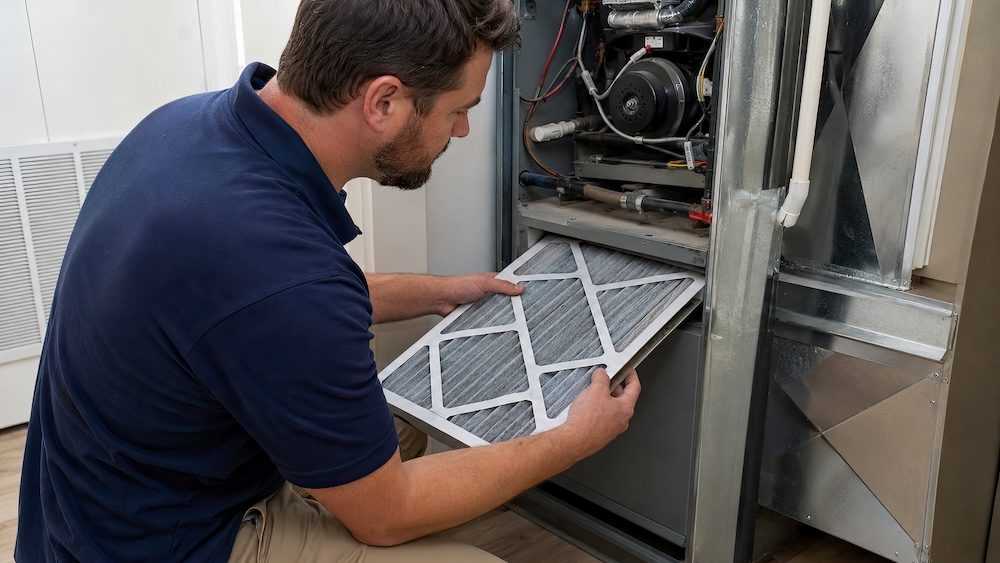
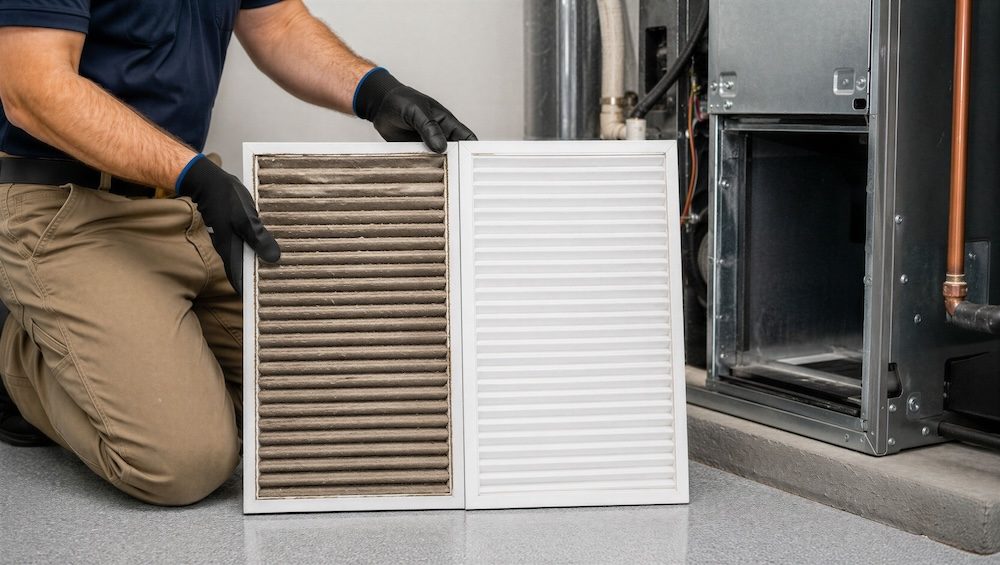
Physically checking the filter is straightforward. Shut off the HVAC system, slide out the filter, and hold it up to a light source. If minimal light passes through or a layer of gray dust is visible, it is time to change it.
How Does Household Type Impact Filter Schedule?
Single-family homes on larger lots, a common setup in Ticonderoga, may have greater exposure to both outdoor particles and pet dander than apartments or newer townhouses.
Residents should especially consider:
- Households with pets: Change filters every 1-2 months due to added fur and dander.
- Smokers or frequent fireplace use: Monthly changes help manage ash and smoke particulates.
- Allergy-prone residents: More frequent changes, possibly every month during peak allergy seasons, will help reduce indoor triggers.
- Vacation homes or properties used seasonally: Check and change filters before and after extended absences rather than on a fixed monthly schedule.
Do Air Quality and Seasonal Changes Matter?
The local pollen season and heating needs make spring and autumn especially challenging. High pollen levels from nearby forests and fields in spring can clog filters quickly. Autumn brings leaf debris and more time indoors.
Winter’s extended use of forced-air heat increases filter workload, while summer can see dust, pet hair, and outdoor air drawn in through open windows or routine HVAC operation. It’s often worth checking the filter monthly during peak use, rather than waiting for a distant reminder.
What Happens If a Filter Isn’t Changed Often Enough?
Delaying filter replacement can cause several issues:
- Decreased system efficiency, resulting in higher energy usage and costs
- Reduced indoor air quality, leading to more dust, allergens, and respiratory discomfort
- Higher risk of system wear, breakdowns, and costly repairs due to strain on the blower motor and other components
A common misconception is that infrequent system use means the filter can last much longer. However, dust and debris still gather on filters over time, even when the HVAC is running less frequently, particularly in older homes or those with higher foot traffic.
What Types of HVAC Filters Are Found Locally?
Most homes use disposable fiberglass or pleated filters, but the thickness, MERV rating, and style may vary. Higher-efficiency filters (with higher MERV ratings) trap smaller particles but may require more frequent changing, especially in dusty or high-use conditions.
Residents should check the HVAC manual or existing filter for the appropriate size and style. Reusable or washable filters exist, but must be cleaned according to manufacturer direction, typically every 30 days, and fully dried before reinstalling.
How Do Residents Establish a Consistent Filter Replacement Routine?
A simple calendar reminder is usually effective for most homeowners. Tying filter inspection and replacement to seasonal maintenance tasks—such as changing clocks for daylight saving time or holiday preparations—can help residents remember.
Some thermostats offer filter change reminders based on run-time, which can be especially useful in the changing climate of the region. Always keep a spare filter on hand to avoid putting off a necessary change due to lack of supplies.